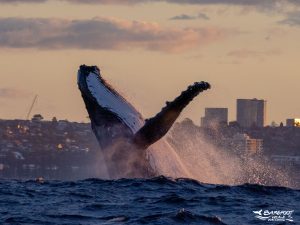
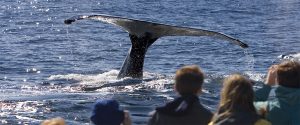
Mostly humpback whales during migration (May–Oct). You might also see minke, southern right, Bryde’s, sei, or even blue whales, bottlenose dolphins, Australian fur seals, sometimes orcas and false killer whales have been observed.
We run whale watching adventures throughout the annual migration of
Humpback Whales. They journey northward from mid May through July, with some still heading north and others beginning their southern journey in August. From September to late October, they return southward. Any period within this range offers excellent opportunities for whale watching. However, after 20 years filming and observing whales off Sydney Captain Dean recommends June to late July as the peak season for Sydney. During this time, we observe the highest concentration of whales on their northern migration, witnessing large pods and a diverse range of behaviours.
Mornings are often calmer at sea, but afternoons can have more playful whale behaviour. There’s no guaranteed best time.
Boats stay at least 100m away, but curious whales sometimes come closer—this is called a “mugging.”
Well that’s up to the behaviour of the whales. Regulations exist to safeguard these majestic creatures. By law, all boats, whether for whale watching or recreation, must maintain a minimum distance of 100 meters from adult whales. Humpback whales, known for their curiosity, may approach boats closely. At times, they come so near that the boat’s movement is restricted, a phenomenon affectionately termed a ‘mugging.’ However, such encounters do not occur on every tour.
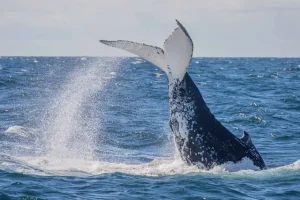
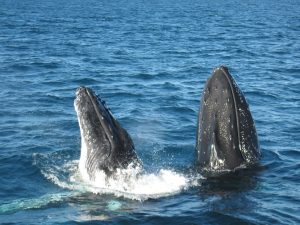
Breaching and behaviours like pectoral slapping or spy-hopping aren’t guaranteed, but Captain Dean explains all behaviours we do see on board. We love seeing whales breaching too! However, let’s keep our expectations realistic; breaching doesn’t happen every day. As wild animals, whales exhibit diverse behaviours, and our goal is to respectfully observe them during our encounters. Captain Dean is dedicated to navigating around whales with care. Ultimately, the behaviour we witness is entirely at the whales’ discretion. Just like us, they have their own unique personalities and moods each day as they migrate. To fully appreciate the range of whale behaviours, multiple whale watching trips may be necessary, although occasionally, we’re fortunate enough to witness various behaviours within a single tour. Captain Dean will explain the behaviours we see on your cruise and the theories behind why whales breach, pectoral slap and spy hop.
At Barefoot Whale Watching, it means we’ve seen at least one whale three times during the tour.
Typically, during our whale watching tours, we spend time with multiple whales, sighting them repeatedly. At Barefoot Whale Watching Sydney a ‘whale sighting’ means that we’ve successfully approached at least one whale and observed it on a minimum of three occasions. It’s essential to understand that whales spend most of their lives underwater, only surfacing to breathe, which they do every 5-20 minutes. Therefore, our ability to view them is limited to these moments when they come to the surface.
We offer a 100% whale sighting guarantee. You’ll get a free return tour, valid for the current season. No refunds apply unless your tour is cancelled.
Rest assured, we make every effort to ensure whales are sighted on our tours. However, it’s crucial to understand that whales are wild animals! In the rare event that no whales are spotted during your tour, we extend the opportunity for you to join another whale watching adventure at no extra cost. This offer is valid for the current season only and cannot be transferred. Please note that this offer does not entitle you to a refund. If no whales are sighted during the final weeks of the whale watching season, a voucher will be issued for the following season’s whale watching tours.
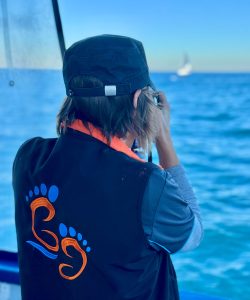
Yes! Bring a camera or phone—zoom lenses help for magical shots.
We like to allow around 3+ hrs for most of our different tours. Tours usually run 2.5 to 4 hours, depending on sea conditions and sightings.